Are Certified Carbon Credits an Opportunity for Hemp Farmers?

Industrial hemp could be a big help for big companies trying to make their supply chains greener. But, to fully unlock hemp’s power to fight climate change, we need strong certification programs.

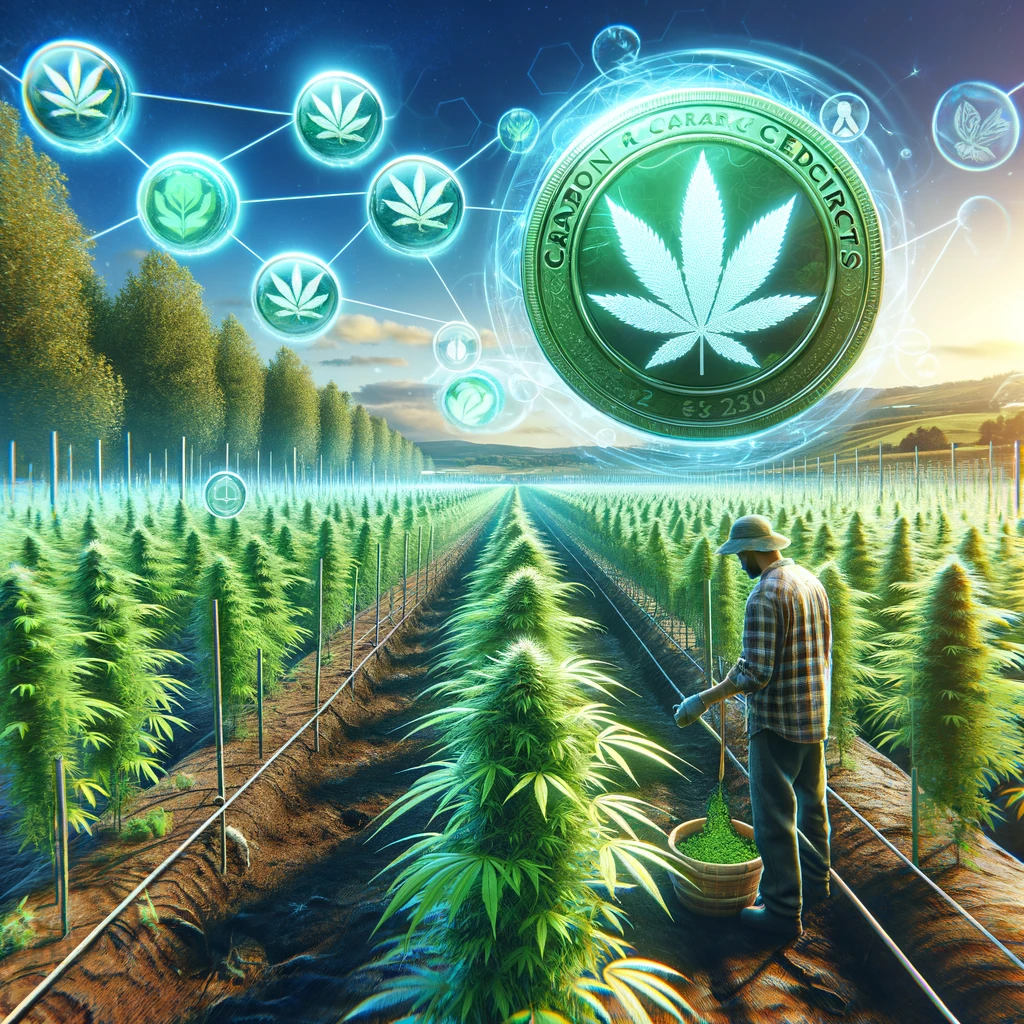
A new study from HempConnect in Hamburg, which offers carbon-counting services and helps with hemp biochar projects, says there’s a big chance for hemp in the Carbon Dioxide Removal (CDR) market. Right now, there aren’t enough certified carbon credits, but hemp could change that.

We need to act quickly. The CDR market is growing fast, and hemp could play a key role. The report from HempConnect points out that hemp sucks up a lot of CO2 and could create a lot of CDR certificates. But so far, no high-quality certificates from hemp have been traded.

The global CDR market could be worth $100 billion by 2050, says the International Energy Agency. This growth is driven by the need to fight climate change and the development of cheaper CDR methods.

Nando Knodel, co-CEO of HempConnect, says CDR certificates are sold for at least $100 for every ton of CO2.
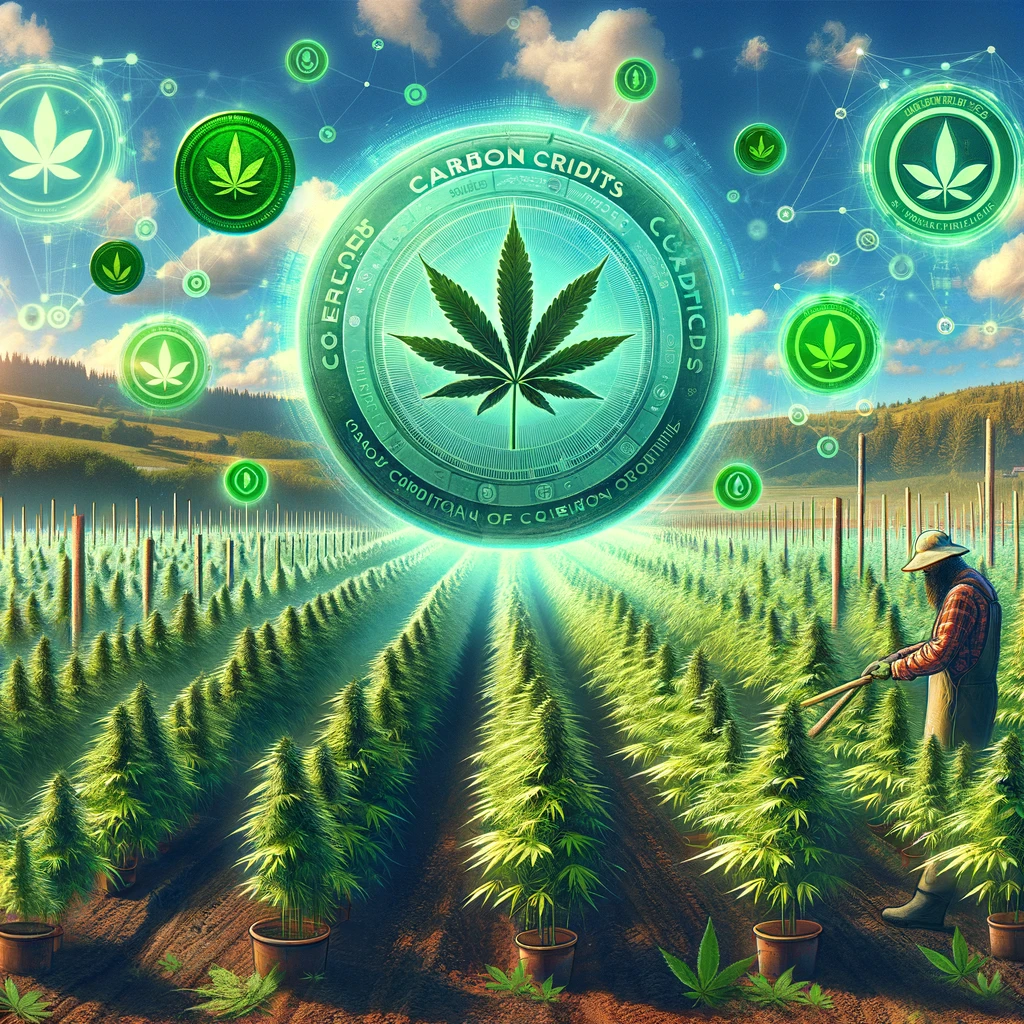
CDR is different from offsets. CDR measures the actual decrease in emissions, taking into account the CO2 absorbed by hemp minus any emissions from processing. Offsets, however, are about avoiding or reducing emissions, not necessarily resulting in net-negative emissions.

The report highlights how industrial hemp can contribute to the CDR market as a natural solution to climate change.

But there’s a problem with “offsets” – they’ve gotten a bad rap in the media. Poor quality certificates have led to a downward spiral in the market, the report says.

Knodel emphasizes that buying offsets might help reduce emissions, but buying CDR credits is about truly neutralizing emissions and supporting technologies that actually reduce CO2 in the atmosphere. Achieving a net-zero economy will depend on CDR.

Hemp, as a crop that offsets its own carbon footprint, has a lot of potentials. According to the report, we could start using hemp for CDR soon.

No industry can stand on the sidelines of this global effort, the report concludes.
Amount of Hemp Grown Commercially in the USA for 2023

In 2023, it looks like the amount of hemp grown in the U.S. didn’t change much. Around 19,500 acres were harvested, says a recent estimate from the Agriculture Department. This comes after checking the numbers for the last three years.

A report from last week by the U.S. Department of Agriculture’s Farm Service Agency mentioned that farmers planted about 22,248 acres of hemp all over the country in 2023.

In 2022, the agency had earlier said that 20,711 acres of hemp were planted. Later updates showed a jump to 28,314 acres, thanks to more detailed stats from the National Agricultural Statistical Service in April 2023.

Out of the total acres planted in 2022, 18,251 acres, or 64%, were actually harvested.

It’s estimated that in 2023, farmers planted close to 30,000 acres of hemp and harvested about 19,500 of those, based on some calculations.

Aside from these numbers, an analysis by Hemp Benchmarks revealed that the growth of hemp for fiber picked up in 2023, going over 10,000 acres. This was a big jump from the 6,850 acres in 2022. For the first time since hemp was made legal in 2018, more hemp was grown for fiber than for making CBD and other products.

No exact number was given for the hemp grown for CBD, but it’s said that there was a big drop in this area in 2023. About 7,105 acres of CBD flowers were harvested in 2022.

The amount of hemp grown for grain remained about the same in 2023, hitting around 5,000 acres.

Kentucky, Oregon, and California were the top states for growing hemp for CBD in 2023. Montana, South Dakota, and Idaho led in growing hemp for both fiber and grain. These three states made up nearly half of all the fiber grown in the U.S. and three-fourths of all the grain.

If these 2023 estimates are accurate, it means the amount of hemp harvested has evened out at around 20,000 acres. This is a big drop from 2019, when nearly 90,000 acres were harvested.

The initial rush to grow hemp for CBD led to a market that didn’t meet expectations. Many farmers and investors lost money when the biomass needed for production didn’t sell, and prices dropped a lot.

After a big decrease between 2021 and 2022, where the harvested area went down to 18,251 acres from about 33,500 acres, these 2023 numbers are being watched closely. The final data for 2023 will be shared by the USDA in April.